
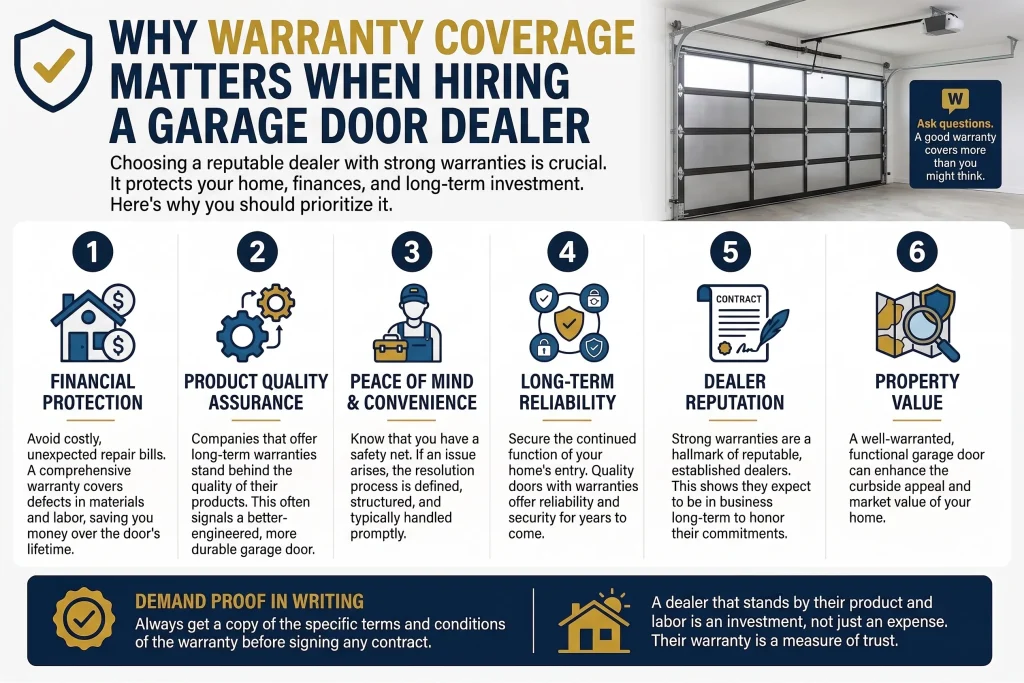
Warranty coverage matters because it protects a homeowner financially after the technician leaves and the invoice is paid in full, sometimes for years afterward. A dealer willing to stand behind a garage door repair with real written terms is one worth trusting for whatever repair comes next.
Overlooking this step leaves a homeowner exposed if parts fail or installation problems surface weeks or months after the original visit. This guide breaks down exactly what a warranty should cover, how coverage terms typically work, and how to confirm those details before any contract gets signed.
Key Takeaways
- Warranty coverage protects a homeowner after the technician leaves
- Parts and labor coverage should both be included in writing
- Coverage terms should survive a change in home ownership
- A dealer’s willingness to honor claims reveals real accountability
- Reviewing warranty terms before signing prevents costly disputes later
What a Garage Door Warranty Should Cover

A complete warranty spells out exactly what happens if something fails after the job is finished, not just while the technician is still on site.
Warranty Element | What It Covers | Why It Matters |
Parts coverage | Springs, openers, panels, and hardware | Protects against manufacturing or installation defects |
Labor coverage | Time spent diagnosing and fixing issues | Prevents paying twice for the same repair |
Coverage length | The defined period after installation | Sets clear expectations for how long protection lasts |
Transferability | Whether coverage moves with a home sale | Adds resale value to the original investment |
Exclusions | What voids coverage before it expires | Clarifies homeowner responsibilities during the term |
Reviewing these five elements together confirms whether a warranty offers real protection or only looks strong on paper.
Parts Coverage on Springs, Openers, and Panels
Parts coverage specifies exactly which physical components a warranty protects if they fail after installation.
A strong parts warranty typically includes:
- Torsion and extension springs covered against premature failure
- Opener motors and circuit boards covered for defects
- Panel sections covered if they warp or crack early
- Genuine replacement parts specified rather than generic substitutes
- Confirmation that the dealer follows manufacturer-recommended selection standards rather than cutting corners on parts
To review the broader signals that separate a dealer worth trusting from one that is not, read our guide on Best Practices for Building Trust as a Garage Door Dealer, which walks through every credential worth checking first.
Labor Coverage for Installation and Repair Work
Labor coverage confirms whether a dealer charges again for time spent fixing a problem tied to their own original work.
Reliable labor coverage generally addresses:
- Diagnostic time covered separately from any parts replaced
- Return visits scheduled at no added cost during the coverage period
- Installation errors corrected without a second service charge
- Clear time limits on how long labor coverage actually lasts
- Documentation showing labor terms in writing, not just verbally promised
A dealer who charges full price for a return visit tied to their own garage door replacement mistake rarely deserves a second chance.
Length of Coverage and Renewal Terms
Coverage length determines exactly how long a homeowner remains fully protected after the original installation or repair.
Typical coverage terms vary based on:
- Standard manufacturer warranties often running one to several years
- Extended dealer warranties sometimes offered at an added cost
- Renewal options available once original coverage terms expire
- Coverage length matching the expected lifespan of the specific part
- Written start dates confirming exactly when the clock begins
To weigh how coverage length compares against a dealer’s other credentials before signing anything, read our guide on How to Choose a Licensed and Insured Garage Door Dealer, which walks through every document worth requesting.
Transferability If the Home Is Sold
Transferability determines whether warranty protection transfers with the garage door or ends the moment ownership changes hands.
Homeowners should confirm the following before assuming coverage transfers:
- Written confirmation that the warranty explicitly transfers to a new owner
- Any transfer fees or paperwork required to formalize the change
- Time limits on how soon after a sale the transfer must happen
- Whether a fresh garage door opener installation resets the coverage clock
- Documentation the seller can hand off directly to the buyer
A genuinely transferable warranty adds real, lasting resale value that a non-transferable one simply cannot offer to future buyers.
What Voids a Warranty Before It Expires
Warranty exclusions outline the specific actions or conditions that can cancel coverage early, even within the stated term.
Common causes of voided coverage include:
- Repairs performed by an unauthorized third party
- Damage caused by severe weather beyond normal wear
- Required maintenance that never actually gets performed
- Modifications made to the original equipment without approval
- Hiring outside a credentialed professional network the manufacturer or dealer actually recognizes
To confirm whether a dealer’s claims history matches the coverage they promise, read our guide on How Online Reviews Reveal a Trustworthy Garage Door Dealer, which covers exactly what real experiences reveal.
Locking In Warranty Terms Before the Contract Is Signed
Working through every warranty detail before signing prevents disputes that are far harder to resolve once work has already started.
The final checks worth completing include:
- Requesting the full warranty in writing, not a verbal summary
- Asking directly what voids coverage under normal use
- Checking whether garage door maintenance requirements affect eligibility
- Verifying the dealer’s history of honoring past claims
- Keeping a signed copy alongside the original invoice and estimate
A homeowner who settles these details upfront avoids the frustration of a warranty that offers less protection than it first appeared to promise.
A Comprehensive Warranty Protects the Investment Long After Installation

A warranty is only as valuable as a dealer’s genuine willingness to honor it the moment a real problem actually surfaces after the work is finished. Confirming these written terms before signing protects the full investment for years beyond the original installation date, long after the technician has already left the property.
Affordable Garage Door Repairs of Castleton backs every job in Castleton, IN with warranty terms homeowners can actually rely on when something goes wrong. Contact us or give us a call today, and let the team walk through exactly what coverage applies before any work begins.