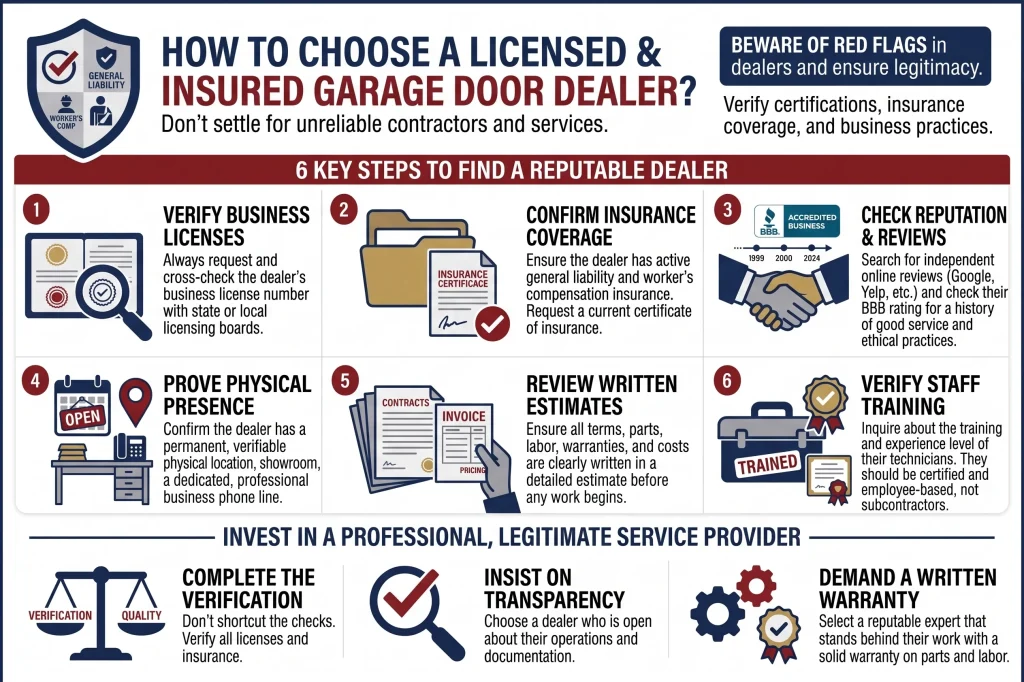
Choosing a licensed and insured garage door dealer means confirming their legal standing before any technician ever sets foot on the property. A garage door installation or repair handled by an unlicensed dealer can leave a homeowner with no real protection if something goes wrong.
Checking these details takes only a few minutes of research but can prevent months of frustration, unexpected costs, and real legal exposure from an unqualified hire. This walkthrough covers exactly where to look for each specific document and what each one should confirm before hiring.
Key Takeaways
- A valid license confirms a dealer meets state or local legal requirements
- Insurance protects homeowners from liability if something goes wrong
- Bonding adds a financial safeguard beyond basic insurance coverage
- Manufacturer certifications confirm training on specific opener brands
- Verifying these details takes only a few minutes before hiring
Steps to Verify a Dealer’s License and Insurance
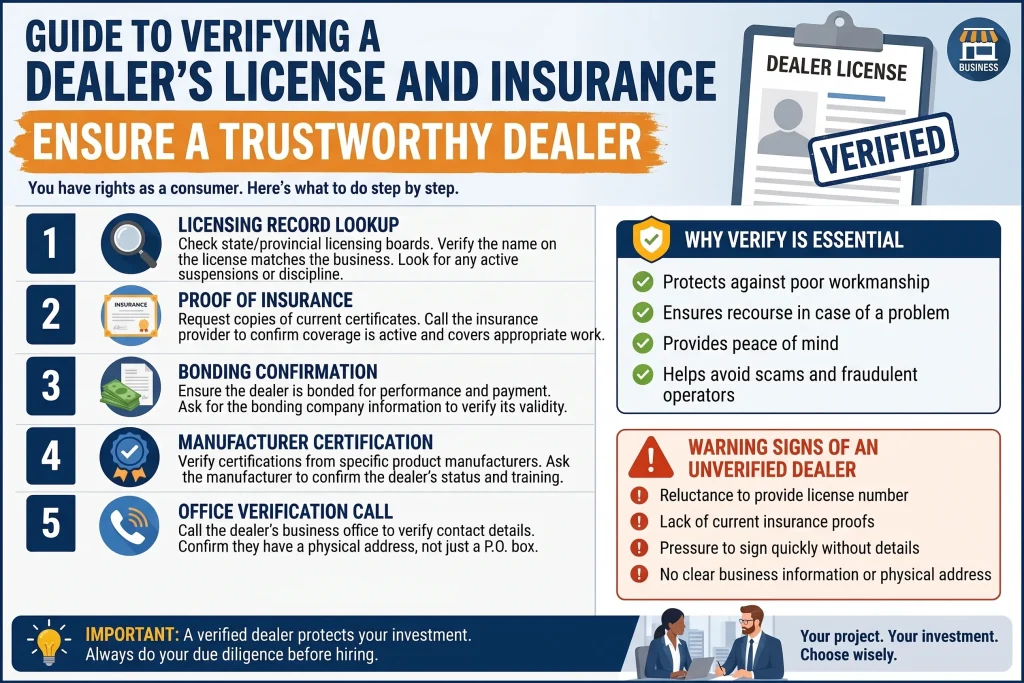
Verifying a dealer’s credentials follows a consistent process regardless of the size or scope of the job being hired out.
Verification Step | What It Confirms | How to Check It |
Licensing record lookup | Legal authority to operate in the area | State or local licensing board website |
Proof of insurance | Liability coverage during the job | Certificate requested directly from the dealer |
Bonding confirmation | Financial protection beyond insurance | Bonding number listed on the dealer’s site |
Manufacturer certification | Training on specific opener brands | Certification badges or direct confirmation |
Office verification call | Accuracy of all submitted documents | A direct call to the dealer’s main office |
Confirming these specific details in advance gives a homeowner the clearest possible picture of a dealer’s legitimacy before hiring.
Check State or Local Licensing Records
Licensing records confirm whether a garage door company holds an active, legitimate license to operate in the area.
Homeowners can typically find this information through:
- State or local licensing board websites with searchable dealer databases
- License numbers listed directly on the dealer’s own website or invoices
- Confirmation calls placed to the licensing board’s main office
- Cross-checking the license name against the company name on file
- Verifying the license remains current and has not expired recently
To review the broader picture of what separates a trustworthy dealer from a risky one, read our guide on Best Practices for Building Trust as a Garage Door Dealer, which covers every signal worth checking.
Request Proof of Insurance Directly
Insurance directly protects a homeowner if property damage or injury occurs during a garage door repair or installation.
A proper certificate of insurance should include:
- The insurance carrier’s name and active policy number
- Coverage limits that reflect the scope of the work being done
- An expiration date that has not already passed
- The dealer’s business name appearing exactly as it does on file
- General liability coverage kept separate from vehicle insurance
Homeowners who confirm insurance upfront are already following the same dealer-selection guidance manufacturers themselves recommend before hiring anyone.
Confirm Bonding Information
Bonding adds a layer of financial protection beyond standard insurance, covering situations insurance alone might not.
Homeowners can confirm bonding through:
- Bonding numbers listed on the dealer’s website or paperwork
- Direct confirmation from the bonding company itself
- State-specific bonding requirements that vary by license type
- Verification that the bond remains active and unclaimed
- Cross-referencing bond amounts against typical project costs
To weigh how bonding fits alongside the other financial protections a dealer should carry, read our guide on Why Warranty Coverage Matters When Hiring a Garage Door Dealer, which breaks down every layer of protection in detail.
Verify Manufacturer Certifications
Manufacturer certifications confirm a technician received real, brand-specific training on the garage door opener systems they install.
These credentials typically show up as:
- Certification badges displayed on the dealer’s website or trucks
- Direct confirmation available through the manufacturer’s dealer locator tool
- Training completion dates that remain current, not expired
- Specific brand names lining up with the equipment being installed
- Continuing education records covering newer smart opener technology
To review how homeowners can judge the accuracy of these claims once a dealer is actually hired, read our guide on How Online Reviews Reveal a Trustworthy Garage Door Dealer, which covers exactly what real feedback looks like.
Ask the Dealer’s Office to Confirm Details
A direct phone call to the dealer’s own office remains the fastest, most reliable way to confirm every document lines up correctly.
During this call, homeowners should ask about:
- Confirmation of the exact license number listed online
- Verification that insurance and bonding remain active
- Details on which technicians hold manufacturer certifications
- How long the dealer has served the local area
- Whether the office can send written copies of each document
Clear, direct answers to these specific questions over the phone confirm a credentialed professional worth trusting with the job.
Finalizing the Hire Once Licensing and Insurance Check Out
Once every credential checks out, a homeowner can move forward with confidence rather than lingering doubt about the decision.
The final steps before scheduling typically include:
- Requesting a written estimate that reflects the full scope of work
- Confirming the technician assigned holds the certifications discussed
- Asking about warranty coverage on both parts and labor
- Scheduling the appointment during a convenient window
- Keeping copies of all verified documents for future reference
A dealer who passes every one of these checks is one worth calling again for future broken garage door spring repairs or any other need that comes up.
A Licensed, Insured Dealer Is the Safer Long-Term Choice
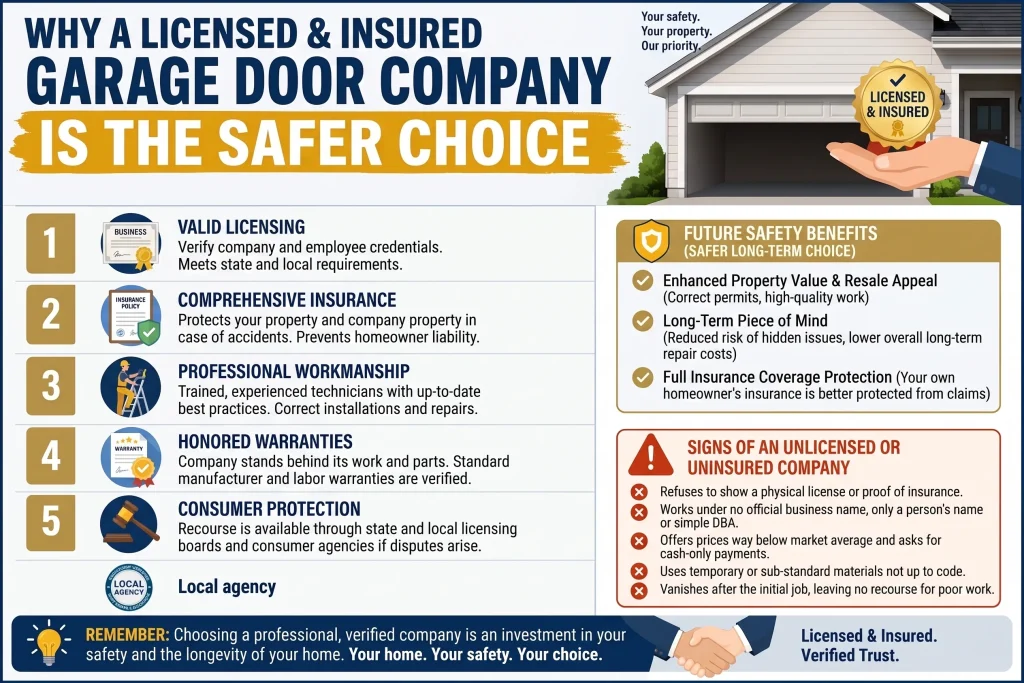
A homeowner who overlooks license and insurance verification takes on real financial and legal risks that a few minutes of upfront research could have easily prevented. Choosing a properly credentialed dealer protects both the property itself and the long-term value of the investment.
Affordable Garage Door Repairs of Castleton holds the licensing and insurance every Castleton, IN homeowner should expect from a dealer trusted with their residential garage door. Contact us or give us a call today, and let the team confirm all credentials before any work begins.