
A garage door usually stops short of fully opening because of a worn roller, a misaligned sensor, or a spring that no longer holds its proper tension. Reliable garage door service identifies these mechanical issues early, well before the opener starts straining with every single use.
Identifying the exact cause takes a closer look at the track, springs, and sensors working together as one connected system. This guide walks through common causes of a door that stops early, the checks that are safe to try, and when the issue calls for a trained professional.
Key Takeaways
- A misaligned track or worn roller often stops a door short of fully opening
- Sensor obstructions can cause a door to reverse before reaching the top
- Spring tension problems affect how far an automatic opener can lift the door
- Some causes are safe to check directly, others carry a real safety risk
- Professional diagnosis helps homeowners avoid repeated or costly repairs
Signs a Garage Door Isn’t Opening All the Way
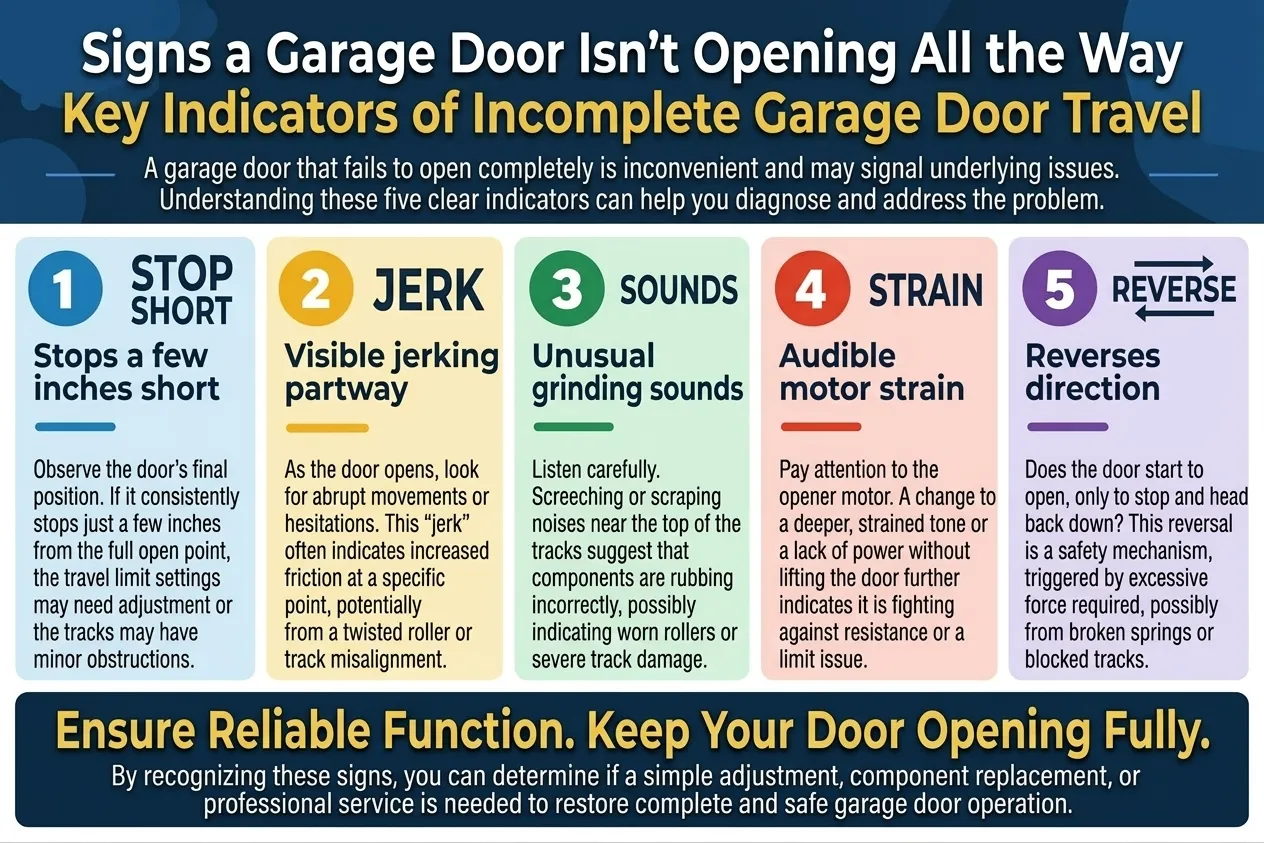
Failure to reach full height rarely happens on its own, without other noticeable clues appearing somewhere alongside it.
Watch for the following signs before assuming a single simple cause:
- The door stopping a consistent few inches short every time
- Visible jerking or hesitation partway through the opening cycle
- Unusual grinding or friction-related sounds near the top of the track
- The opener motor straining audibly without lifting the door further
- The door reversing direction before it reaches the top
Together, these signs point to a genuine mechanical or sensor-related issue rather than a simple one-time glitch.
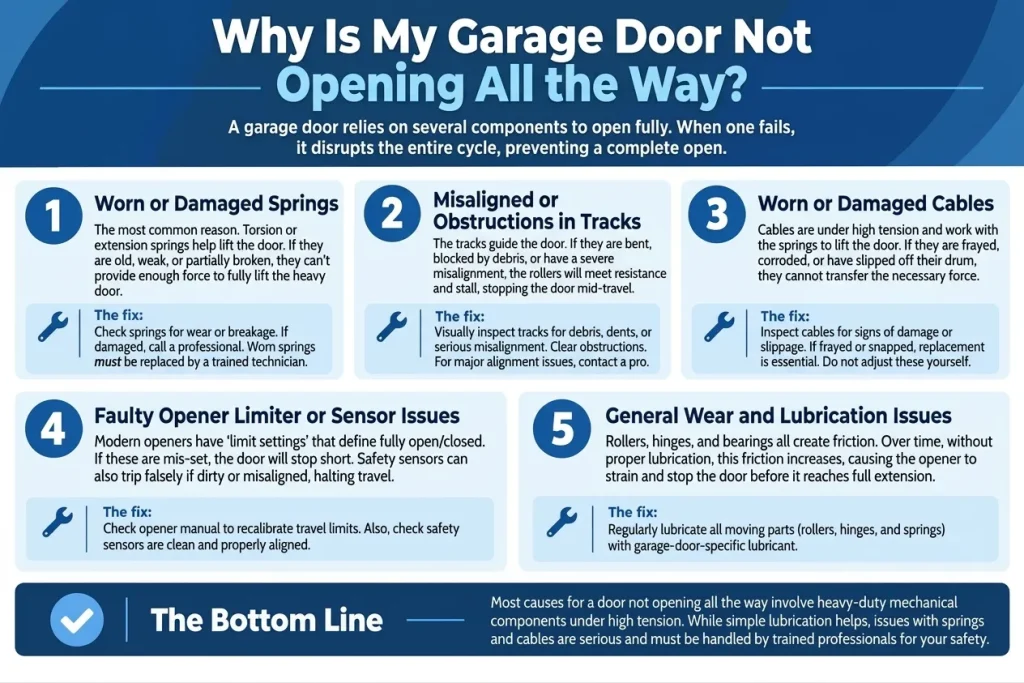
Common Causes of a Garage Door Not Opening All the Way
Multiple distinct issues can prevent a door from completing its full opening cycle, each one affecting a different part of the system.
Cause | What It Affects | Common With |
Worn or misaligned rollers | Smooth track movement | Older doors with frequent daily use |
Sensor obstructions | Opener response to the door’s path | Doors near stored items or debris |
Spring tension problems | Balance of the door during lift | Doors nearing the end of spring life |
Opener limit settings | How far the opener travels before stopping | Doors recently serviced or adjusted |
Bent track or panel damage | Physical clearance along the track | Doors struck by a vehicle or object |
An unresolved roller, sensor, or spring issue typically forces the opener motor to work harder with each use, accelerating wear on parts that were otherwise still functional.
Worn or Misaligned Rollers
Worn or misaligned rollers create friction that slows or stops the door partway through its cycle, especially on doors used multiple times a day.
Common indicators of roller-related trouble include:
- Rollers appearing cracked, flattened, or visibly worn down
- A door that moves unevenly on one side compared to the other
- Grinding noises concentrated near specific points on the track
- Rollers sitting loosely or rattling within the track itself
- Metal rollers showing rust or corrosion buildup
Replacing worn rollers early prevents the added strain that leads to a bigger garage door repair need once the surrounding track starts to suffer as well.
Sensor Obstructions or Misalignment
Blocked or misaligned sensors can cause the opener to stop or reverse before the door reaches the top of its travel.
Typical sensor-related issues include:
- Dust, cobwebs, or debris covering the sensor lenses
- Sensors knocked out of alignment by nearby stored items or obstructions
- Sensor lights blinking or showing an inconsistent color
- Objects sitting directly within the sensor’s detection path
- Wiring connections loosened at either sensor unit
Consistent stopping at the same point in the cycle almost always points toward a sensor issue, not a mechanical one elsewhere in the system.
Spring Tension or Balance Problems
Garage door springs that have lost proper tension can no longer support the full weight of the door, leaving the opener to strain without ever completing the lift.
Warning signs of spring-related tension problems include:
- A door that feels unusually heavy when lifted by hand
- Visible gaps or stretching along the spring coils
- A door that closes faster than normal due to reduced resistance
- Uneven movement suggesting one torsion spring bears more load than the other
- A loud bang heard at some point before the issue first began
Correcting a broken garage door spring repair issue restores the door balance the opener needs to lift it fully, safely, and without added strain.
Opener Limit Settings Out of Adjustment
Limit settings that are set too conservatively can cause the opener to stop the door well before it reaches its intended full-open position.
Signs the limit settings may need adjustment include:
- The door stopping at the same height on every single cycle
- Recent motor or gear replacement without a limit reset
- A door that opens fully by hand but not through the automatic opener
- Clicking or straining sounds once the door reaches its stopping point
- Settings that were changed during a previous repair visit
A consistent, repeatable stopping height on every cycle signals the limit settings likely need direct, hands-on attention soon.
Bent Track or Door Panel Damage
Physical damage to the track or door panels can create a mechanical block that prevents the door from traveling its full intended range.
Common causes of this kind of damage include:
- A vehicle or object striking the door or track directly
- Track sections and hinges pulling away from the wall over time
- Panels warping from prolonged sun or moisture exposure
- Loose bolts allowing the track to shift out of position
- Dents affecting how smoothly a panel passes through the track
Addressing a garage door replacement need early prevents a damaged panel or track from causing further mechanical strain throughout the rest of the system.
What Should Be Checked Before Attempting Any Fix?
Confirming a few basic details before touching any component helps avoid making the problem worse or creating an unnecessary new safety risk.
Work through the following checks before attempting anything else:
- Confirming the red emergency release cord hangs freely and functions properly
- Checking whether the sensors show a steady, matching light on both units
- Testing whether the door moves smoothly when operated in manual mode
- Looking for visible friction points along the full length of the track
- Noting exactly when in the cycle the door stops or reverses
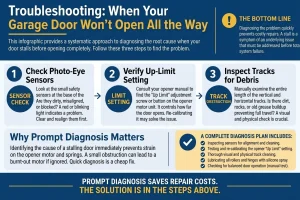
To learn which checks are safe to do without professional help, read our guide on How to Diagnose a Garage Door That Won’t Open All the Way, which walks through every step in order.
Common Fixes a Homeowner Can Try
Multiple causes behind a door that will not fully open can be addressed safely without calling in outside help right away.
Consider trying the following fixes before escalating the issue further:
- Cleaning sensor lenses and confirming both units line up correctly
- Tightening loose bolts or brackets along the visible track
- Lubricating rollers and hinges to reduce friction during movement
- Clearing any obstructions sitting near the sensor’s detection path
- Adjusting opener limit settings according to the manufacturer’s instructions
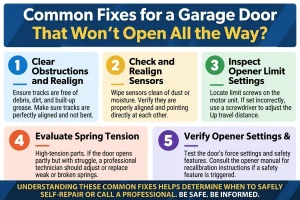
To weigh which of these fixes are worth attempting at home before calling for backup, read our guide on Common Fixes for a Garage Door That Won’t Open All the Way, which breaks down every option in detail.
What Should Be Done If the Fixes Don’t Work?
Persistent trouble opening fully after basic fixes points to a deeper issue that needs closer, more careful attention.
Consider the following next steps before attempting anything further on the door:
- Reviewing whether multiple causes might be occurring at the same time
- Checking whether the opener itself shows signs of a malfunction
- Confirming the emergency release cord still functions properly for manual use
- Documenting exactly when and how the issue occurs for a technician
- Avoiding repeated forceful attempts that could worsen existing damage
If every basic fix you’ve tried so far fails, it usually signals a problem that needs a trained eye and the right tools to resolve.
How Professionals Handle a Garage Door That Won’t Fully Open
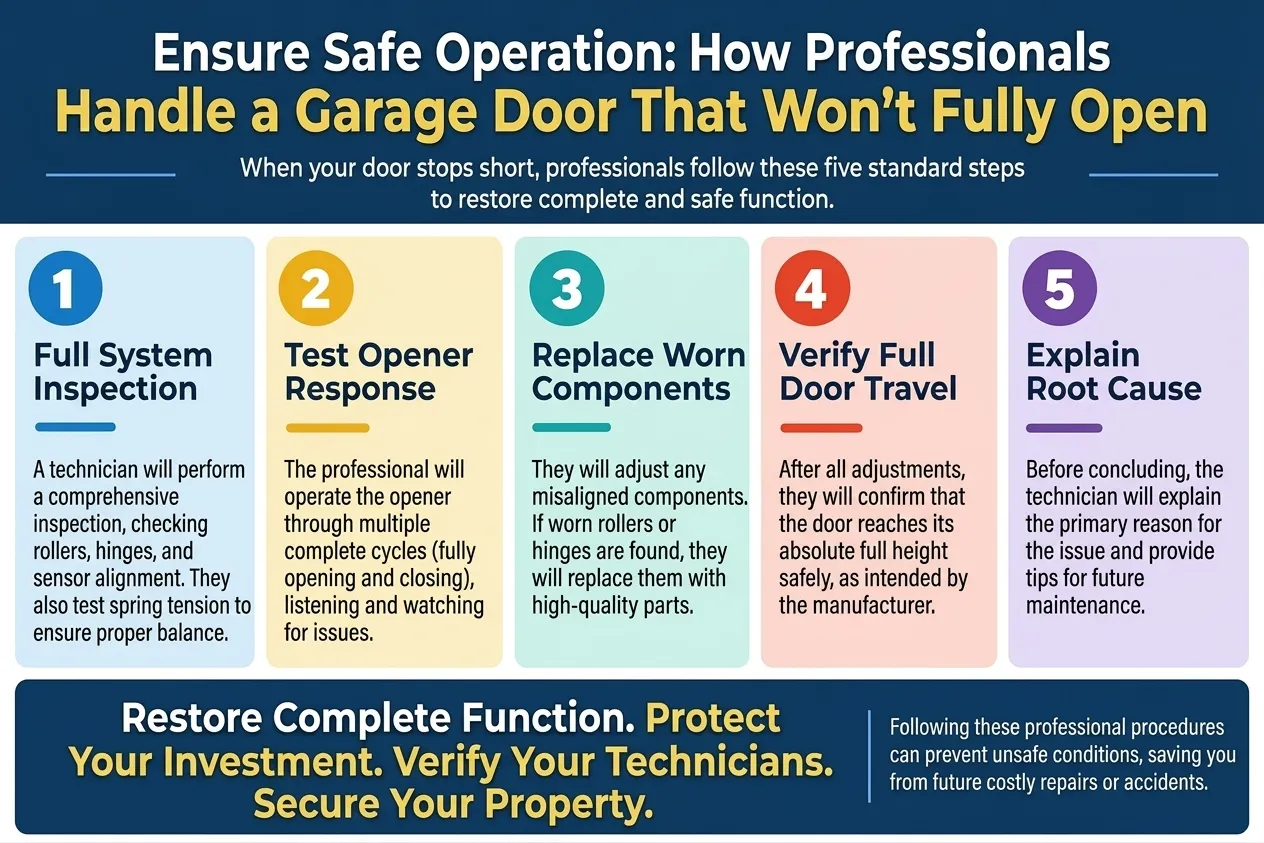
Trained technicians approach a door that will not fully open with tools and diagnostic steps well beyond what most homeowners have on hand.
Professional visits generally include the following steps:
- A full inspection of rollers, hinges, sensors, and spring tension
- Testing the opener’s response across a complete opening and closing cycle
- Adjusting or replacing worn components identified during inspection
- Confirming the door reaches full height safely after every adjustment
- Explaining the root cause clearly before the visit concludes
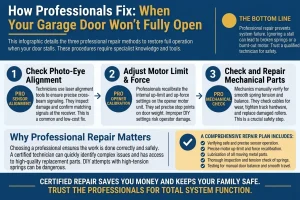
To understand what a professional repair process looks like from start to finish, read our guide on How Professionals Fix a Garage Door That Won’t Fully Open, which covers every stage in detail.
Getting a Garage Door Back to Full Range of Motion
Persistent stopping short of fully opening rarely resolves on its own, whether the actual cause involves the track, the springs, or the sensors working together. Identifying the mechanical cause early prevents the repeated strain that can lead to a much larger, far more costly repair.
Affordable Garage Door Repairs of Castleton diagnoses this exact issue for homeowners throughout Castleton, IN, using the same systematic approach outlined above. Contact us or give us a call today, and let the team get the door moving smoothly through its full range of motion again.