
A garage door wont close for several reasons, and each one points to a specific part of the system that needs attention. Understanding the root cause is the first step toward finding the right garage door repair solution that gets the door working again the way it should.
Fixing a garage door that won’t close requires a clear look at the sensors, tracks, opener settings, and mechanical components involved. This guide breaks down every common cause and proven fix so the problem gets resolved correctly and completely from start to finish.
Why Won’t My Garage Door Close All the Way?
A garage door wont close all the way when something inside the system has shifted, worn out, or stopped functioning the way it was designed to, and pinpointing that specific cause is what makes every fix more effective.
Several issues can stop the door from reaching the ground completely:
- Safety sensors that are blocked, dirty, or misaligned interrupt the beam and signal the opener to stop
- Incorrect travel limits on the opener cause the door to halt before it reaches the ground
- Debris, dents, or bends in the tracks prevent the rollers from completing their full travel path
- Weakened springs or cables can no longer carry enough tension to guide the door all the way down
- Too much force detected by the opener during closing triggers an automatic stop mid-cycle
To understand the full picture of what triggers these issues from the start, read our guide on Why Garage Door Won’t Close, which covers the most common reasons homeowners in Castleton, IN deal with this problem before it becomes a bigger repair.
Signs Your Garage Door Has a Closing Problem
A garage door that stops, reverses, or struggles to close is already telling you that something in the system needs attention.
Signs your garage door has a closing problem include:
- The garage door reverses when closing instead of completing the full cycle to the ground
- Door stops halfway and refuses to move further in either direction
- Grinding, squeaking, or banging sounds appear consistently during the closing cycle
- One side of the door drops lower than the other during operation
- The door closes with the wall button, but not the remote transmitter
Booking a garage door maintenance visit at the first sign of a closing problem keeps minor wear from spreading to other components in the system.
What to Check Before Fixing Your Garage Door
Garage door opener troubleshooting always starts with a few basic checks that can quickly point you toward the root cause before any repair work begins.
What to check before fixing your garage door:
- Safety sensor indicator lights for any blinking or off signals
- Sensor lenses for dirt, dust, cobwebs, or moisture blocking the beam
- Tracks and rollers for debris, dents, or visible bends along both sides
- Remote transmitter and keypad for dead batteries or signal interference
- Wall button to determine whether the problem is with the opener or the remote
- Floor and door path for any obstruction triggering the auto-reverse feature
Running these checks first saves time and helps a trained technician diagnose the problem more quickly if a garage door service visit is needed.
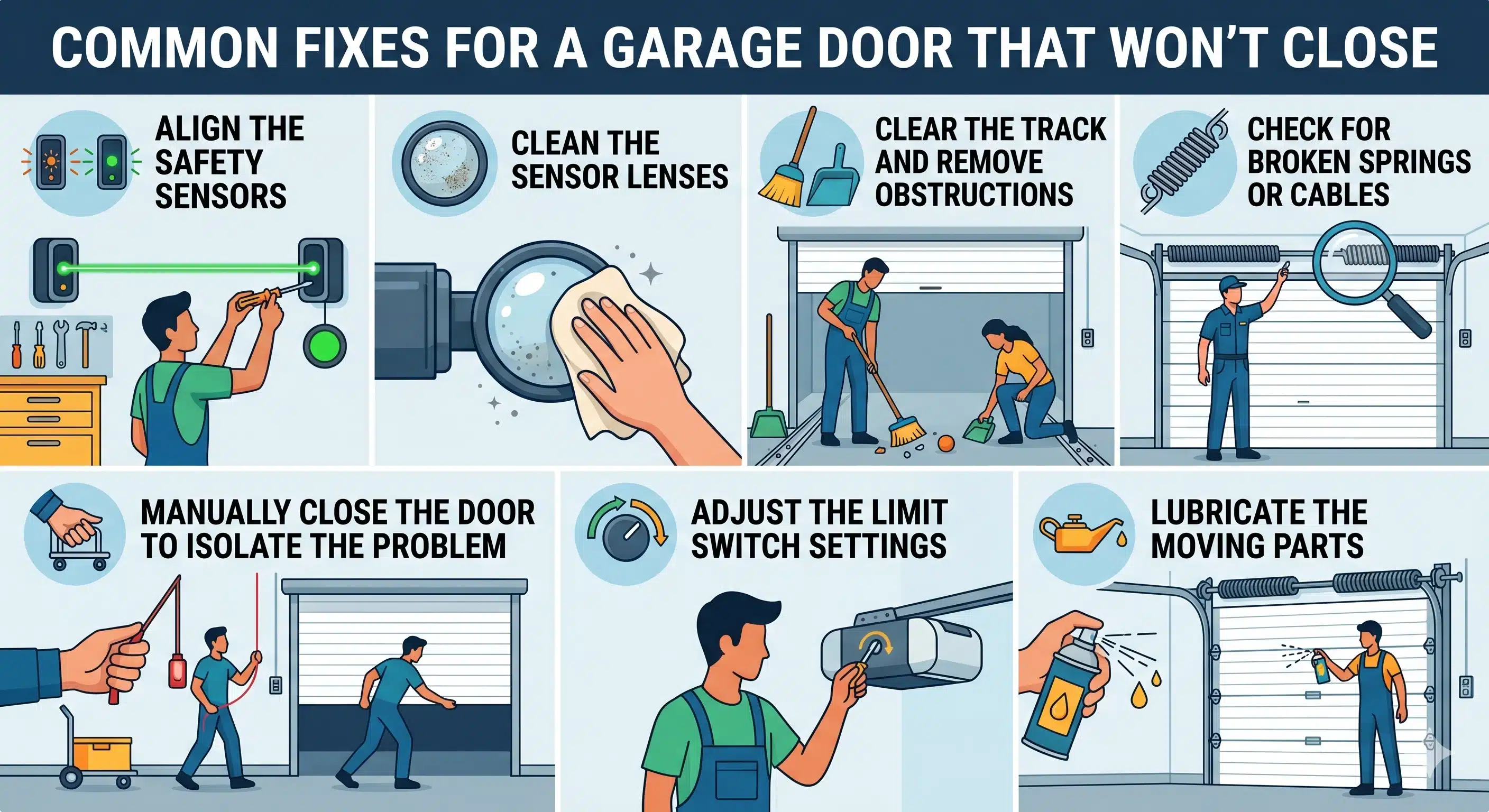
Common Fixes for a Garage Door That Won’t Close
Align the Safety Sensors
Sensor misalignment prevents the invisible beam between the two units from aligning, preventing the opener from completing the closing cycle.
Steps to align the safety sensors:
- Loosen the sensor bracket slightly to allow directional adjustments
- Angle both sensors toward each other until the indicator lights turn solid
- Reposition the angle if direct sunlight is interfering with the lenses
- Tighten the bracket back once both indicator lights confirm alignment
- Test the door with the remote and the wall button to verify the fix
Gently repositioning the sensor brackets until both indicator lights stay solid is usually enough to restore full closing functionality.
Clean the Sensor Lenses
Dirty sensor lenses block the invisible beam, tricking the opener into thinking something is obstructing the door’s path during every closing attempt.
How to clean the sensor lenses properly:
- Use a soft cloth or dry cloth to wipe each lens gently from the center outward
- Remove any cobwebs, dust, or moisture from the full surface of both lenses
- Avoid using wet wipes or harsh chemicals that could leave residue or cause scratches
- Check both lenses after cleaning to confirm no buildup remains on either side
- Test the door immediately after cleaning to see if the closing issue has been resolved
Regularly wiping down the sensor lenses keeps the safety sensors functioning at full capacity between service visits.
Clear the Track and Remove Obstructions
Debris and foreign objects inside the tracks create enough resistance to stop the door mid-cycle before it reaches the ground on either side.
How to clear the tracks and remove obstructions:
- Remove any objects resting on the floor directly under the door’s closing path
- Wipe the inside of both tracks with a dry cloth to clear out dirt and built-up grease
- Use a rubber mallet to gently tap any slightly bent sections back into alignment
- Check the full length of both tracks for dents or warped sections and mark areas needing repair
- Run the door through a full cycle after clearing to confirm smooth travel from top to bottom
Heavily dented or warped sections that cannot be tapped back into position will require professional garage door replacement to restore smooth, consistent travel.
Check for Broken Springs or Cables
Broken garage door springs or frayed cables prevent the door from closing evenly and place excessive load on every other component connected to the system.
What to do when springs or cables are the problem:
- Stop operating the door immediately to avoid stressing the remaining components
- Pull the emergency release cord to prevent any further automatic operation
- Inspect the torsion spring above the door and the extension springs on both sides
- Check both cables along the sides of the door for fraying, slack, or damage
- Call a trained technician to handle spring and cable replacement properly
Contacting a trained technician at the first sign of spring or cable damage prevents further damage to the entire door system.
Manually Close the Door to Isolate the Problem
Pulling the emergency release cord and testing the door by hand quickly reveals whether the garage door or the opener is responsible for the failure to close.
How to isolate the problem using manual operation:
- Pull the emergency release cord to disconnect the trolley from the opener rail
- Lift and lower the door by hand to feel whether it moves smoothly or catches at any point
- Note the exact spot where resistance or binding occurs during manual travel
- Mark any area where the door sticks or drops unevenly for the technician to inspect
- Reconnect the door to the opener after testing by pulling the cord toward the door again
Isolating the problem this way gives a trained technician a much clearer starting point and reduces overall diagnostic time.
Adjust the Limit Switch Settings
Incorrect travel limits tell the opener to stop before the door reaches the ground, making this one of the most overlooked causes of a garage door not closing.
How to adjust the limit switch settings:
- Locate the close limit dial or adjustment screw on the opener motor unit
- Turn the dial in small increments toward the correct closing direction
- Run a full closing cycle after each adjustment to check the result
- Continue adjusting until the door reaches the ground without reversing or stopping short
- Check the opener manual for model-specific instructions, especially for LiftMaster units
A technician performing garage door opener repair can recalibrate the limit settings precisely and confirm that the opener operates within its correct range.
Lubricate the Moving Parts
Friction buildup on rollers, hinges, and tracks forces the opener to work against more resistance than it was designed to handle during every single closing cycle.
How to lubricate the moving parts correctly:
- Apply white lithium grease or silicone-based spray directly to the rollers on both sides
- Work the lubricant into each hinge by moving the door manually after application
- Add a thin coat of lubricant along the torsion spring coils above the door
- Avoid applying lubricant inside the track channels to prevent debris from sticking
- Run the door through several cycles after lubrication to distribute the product evenly
Applying lubrication during regular maintenance reduces the load on the opener motor and extends the working life of every moving part in the closing system.
When Your Garage Door Needs Professional Repair
Certain garage door problems pose real risks when handled without the right tools, training, or experience.
Situations that call for professional garage door repair:
- Broken torsion and extension springs need professional tools and training to replace them
- Frayed or snapped cables along the door sides require controlled professional replacement
- Sensor issues returning after realignment point to an underlying wiring failure
- Motor failures, burnt circuit boards, and electrical problems need expert diagnosis
- A door off its tracks requires a full reset and realignment from a technician
To learn what each situation entails and how technicians approach diagnosis, read our guide on When to Call a Pro If Garage Door Won’t Close, which covers every scenario where professional intervention is necessary.
How to Keep Your Garage Door From Failing After a Repair
A successful repair means nothing without the right maintenance habits to keep the system closing correctly for the long term.
Simple ways to prevent your garage door from not closing again:
- Test the auto-reverse feature monthly by placing an object under the door path
- Wipe the sensor lenses with a soft cloth to prevent buildup from blocking the beam
- Inspect tracks, rollers, and hinges every few months for wear, rust, or damage
- Apply white lithium grease or silicone spray to all moving parts regularly
- Schedule a professional garage door service visit once a year to catch problems early
To get the full breakdown of every maintenance step that keeps closing problems from coming back, read our guide on How to Prevent a Garage Door From Not Closing, which covers every practical habit that protects the system after a repair.
Fixing a Garage Door That Won’t Close Is Easier With the Right Team in Castleton, IN
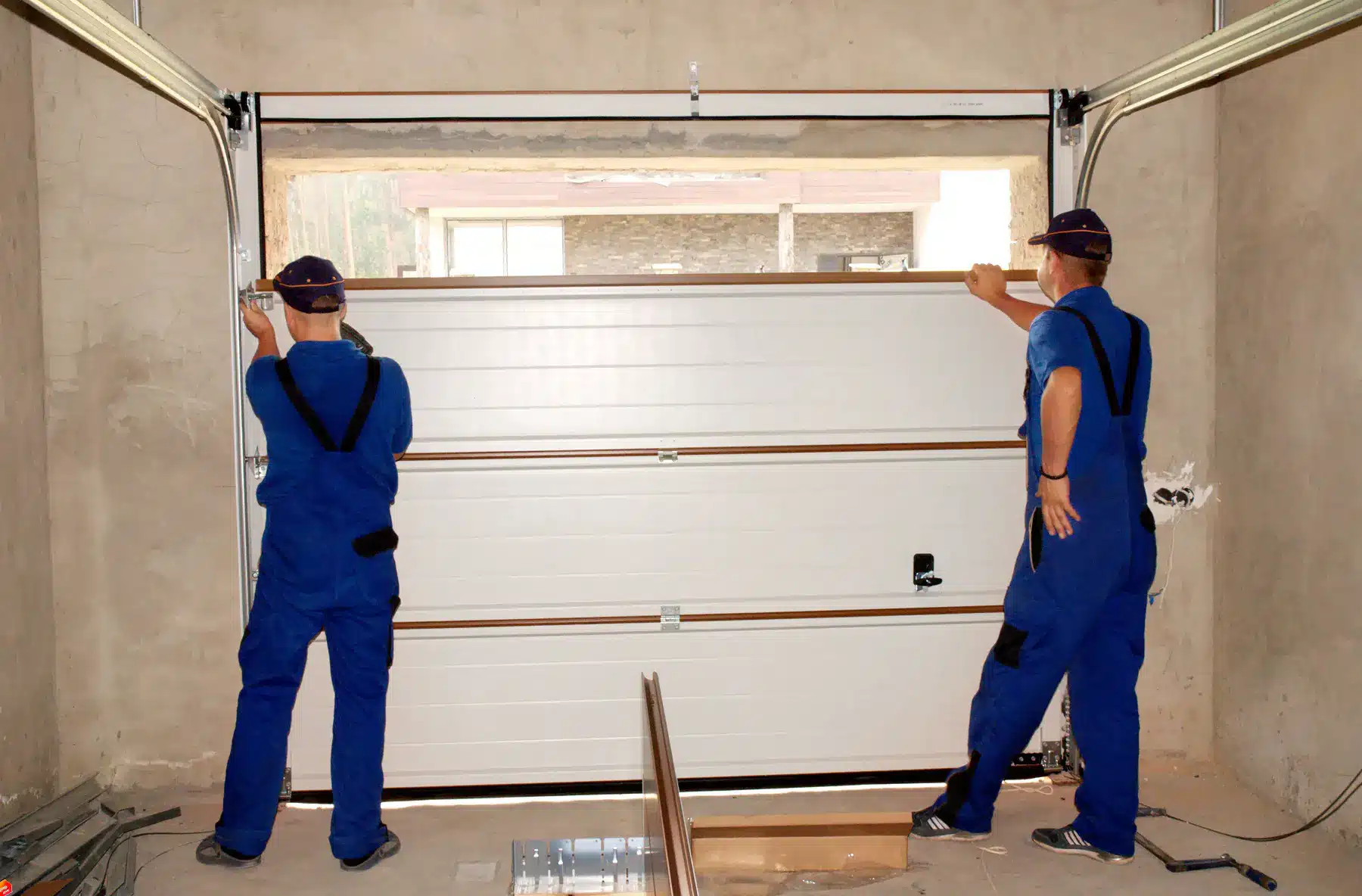
A garage door wont close when something inside the system needs direct attention, and knowing which component is responsible makes every repair faster and more effective. Walking through each fix in the right order is what gets the door closing correctly and keeps it working long after the repair is done.
Affordable Garage Door Repairs of Castleton proudly serves homeowners throughout Castleton, IN, with professional garage door repair services focused on accurate diagnosis and lasting results. Contact us or give us a call today, and let our trained technicians walk you through every fix your garage door needs to close properly again.