Preventing a garage door from not closing is one of the most important things a homeowner can do to keep the door functioning properly throughout the year. Understanding the root cause of the problem early lets you take the right maintenance steps before it requires a full garage door repair service.
Routine maintenance and early detection are the two most powerful tools in keeping a garage door closing properly every single time. This guide walks you through the common causes, warning signs, and proven maintenance steps that prevent a garage door from closing.
Why Routine Maintenance Is Important for Preventing Garage Door Closing Problems
Routine maintenance is the most effective way to prevent a garage door from not closing, as it addresses small issues before they become problems that affect the entire system.
Here is why routine maintenance matters for your garage door:
- Clean and aligned sensors send the correct signal to the opener, so the door closes every time
- Properly tensioned springs and cables give the door enough support to complete the full closing cycle
- Debris-free and undamaged tracks allow the rollers to move freely from top to bottom without interruption
- Tight and stable hardware keeps the tracks in position during daily use
- Well-lubricated components protect the door from weather-related wear that throws off opener calibration
To get a full picture of what triggers these issues from the start, read our guide on Why Garage Door Won’t Close, which covers the most common reasons homeowners encounter this problem before it becomes a bigger repair.
Common Causes of a Garage Door That Won’t Close
A garage door wont close when one or more components in the system stop working the way they were designed to.
The most common causes include:
- Dirty or misaligned sensors block the beam and stop the closing cycle
- Worn springs and frayed cables lose the tension needed to support the door
- Loose hardware and damaged tracks prevent the rollers from traveling the full path
- Incorrect travel limit settings halt the door before it reaches the ground
- Snow and ice buildup trigger the safety reverse under the door
Routine garage door maintenance targets each of these causes before they prevent a garage door from closing.
Warning Signs Your Garage Door Is Starting to Fail
Recognizing the early warning signs of a failing garage door gives you the opportunity to act before the door stops closing completely.
Watch out for these warning signs:
- The door reverses before fully closing, even when the path is completely clear
- The door stops halfway and won’t complete the closing cycle on its own
- Grinding or scraping sounds point to worn rollers, dry hinges, or damaged tracks
- Slow or jerky movement signals worn springs or a struggling opener
- Blinking sensor lights mean the safety sensors are misaligned or losing connection
Multiple warning signs appearing at the same time often indicate an issue that requires professional inspection and garage door opener repair.
How to Maintain Your Garage Door and Prevent Closing Problems
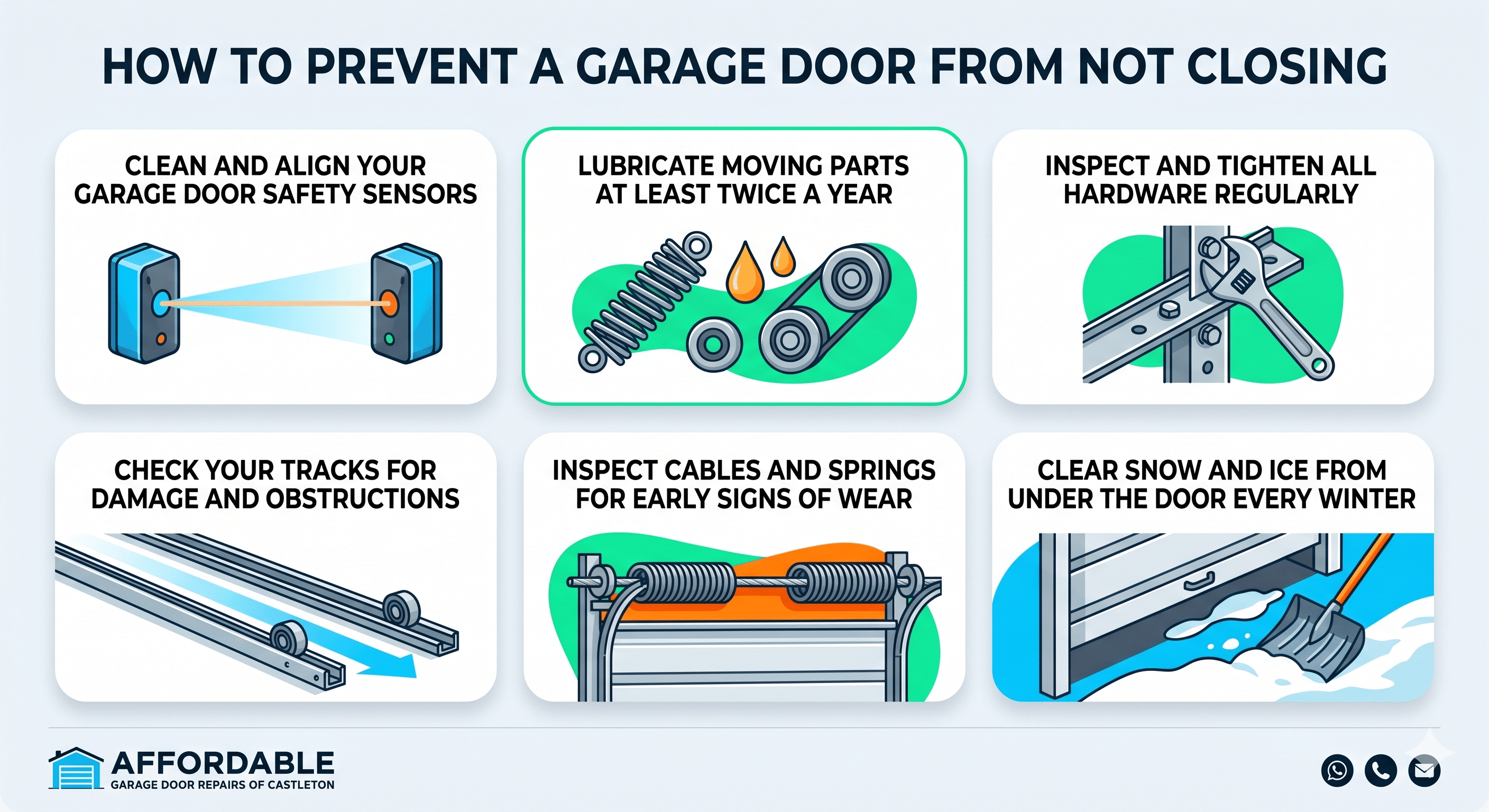
Clean and Align Your Garage Door Safety Sensors
Dirty or misaligned garage door safety sensors interrupt the invisible beam, preventing the opener from completing the closing cycle.
Keep sensors in working condition by doing the following:
- Wipe sensor lenses with a soft cloth to remove dust, dirt, and cobwebs
- Check indicator lights for a solid glow because blinking means misalignment
- Adjust sensor brackets so both units face each other at 4 to 6 inches from the ground
- Inspect sensor wiring for fraying or loose connections
- Shield lenses from direct sunlight to avoid false readings
Restoring proper garage door sensor alignment ensures the beam stays connected and the door closes without interruption.
Lubricate Moving Parts at Least Twice a Year
Skipping lubrication causes metal components to grind against each other, wearing down faster than they were designed to.
Apply the correct lubricant to these components regularly:
- Torsion and extension springs need white lithium grease to reduce friction and prevent rust
- Rollers at the stem need lubrication to spin freely inside the track
- Hinges along the door panels need lubricant to reduce joint stress
- Cables on both sides need a light coat to protect against moisture
- Avoid WD-40 because it strips existing lubrication and leaves components dry
Lubricating every moving part twice a year keeps the door closing smoothly and extends the life of every component in the system.
Inspect and Tighten All Hardware Regularly
Daily vibration gradually loosens every nut, bolt, and bracket that holds the garage door system in place.
Check and tighten these hardware components during every inspection:
- Track bracket bolts need tightening with a socket set to keep the rails in place
- Hinge bolts between door panels loosen from repeated movement
- Cable drum hardware must stay tight to keep cables winding evenly
- Opener mounting hardware can vibrate loose and affect unit alignment
- Roller stems inside the hinges should be checked for bending or cracking
Tightening all hardware at every inspection keeps the door aligned and prevents the gradual shifting that can stop a garage door from closing properly.
Check Your Tracks for Damage and Obstructions
Damaged or obstructed tracks prevent the rollers from completing their full travel path and stop the door from closing all the way.
Inspect the tracks by looking for the following:
- Dents or bends in the track catch the rollers and stop them mid-cycle
- Tracks that are out of plumb cause the rollers to bind before reaching the ground
- Debris inside the track channel blocks the rollers from rolling freely
- Grease buildup inside the tracks creates a sticky residue that slows movement
- An inconsistent roller-to-track gap points to a bent or twisted rail
Keeping the tracks free of damage and obstructions gives the rollers a clean path and allows the door to reach the ground on every closing cycle.
Inspect Cables and Springs for Early Signs of Wear
Cables and springs are under constant tension with every cycle, and wear on either component directly affects the door’s ability to close.
Look for these signs during a cable and spring inspection:
- Fraying or kinking in the cables signals that the cable is close to snapping
- Gaps in the torsion spring coils mean the spring has lost tension
- Rust or corrosion on extension springs increases the risk of a sudden break
- A shifted bottom bracket means the cable has slipped, and the door is unbalanced
- Stretched or uneven spring coils need immediate professional attention
Catching cable and spring wear early prevents a sudden failure that leaves the garage door unable to close without warning.
Clear Snow and Ice From Under the Door Every Winter
Ice and snow buildup at the base of the door triggers the safety reverse feature, preventing the door from closing during the winter months.
Prepare the door for winter by taking these steps:
- Shovel snow away from the base before closing to avoid triggering the safety reverse
- Break up ice along the threshold to prevent the bottom seal from freezing
- Apply silicone spray to the bottom seal before winter to reduce sticking
- Check travel limit settings after a cold spell because extreme temperatures cause incorrect travel limits
- Inspect the bottom door seal at the start of each winter and replace it if cracked
Clearing snow and ice before each closing cycle during winter prevents the safety reverse from triggering and keeps the door functioning properly through the season.
Basic Checks to Do When Your Garage Door Suddenly Won’t Close
A garage door that suddenly won’t close can be traced back to a few basic components that are easy to check before calling a professional.
Start with these basic checks:
- Replace remote batteries because dead batteries are the most common reason the opener stops responding
- Test the wall button to determine if the issue is with the remote or the opener
- Check sensor indicator lights for blinking because it means the beam is interrupted
- Look for objects blocking the sensors, including tools, bikes, or anything near the door frame
- Reset the opener by unplugging it for 30 seconds to clear any minor errors
To find the right fix for issues that persist after these checks, read our guide on How to Fix a Garage Door That Won’t Close, which covers the full repair process for every common garage door closing problem.
Signs It Is Time to Call a Professional After Maintenance Fails
Knowing when regular maintenance is no longer enough is just as important as knowing how to maintain a garage door.
Watch for these signs that professional repair is needed:
- Broken or snapped springs need immediate professional replacement
- Frayed or snapped cables throw off the door balance and require a trained technician
- A failing opener that does not respond to any control needs a full professional diagnostic
- Severely bent tracks cannot be realigned and need full replacement
- Power surge damage to the circuit board requires a licensed electrician or garage door opener repair specialist
To know exactly when professional help is the right call, read our guide on When to Call a Pro If Garage Door Won’t Close, which covers every scenario where professional repair is the only way to restore proper closing functionality.
Keep Your Garage Door From Not Closing With the Right Maintenance

Preventing a garage door from not closing comes down to staying consistent with the maintenance steps that keep every component in the system working as designed. Routine care of the sensors, springs, tracks, and hardware is what separates a garage door that closes reliably every time from one that fails without warning.
Affordable Garage Door Repairs of Castleton proudly serves homeowners throughout Castleton, IN, with professional garage door maintenance and repair services focused on ensuring every door closes properly year-round. Contact us or give us a call today, and let our trained technicians take care of all your maintenance needs before your garage door stops closing altogether.