
A garage door that won’t close directly affects both your home’s security and full functionality, and it should never be left unattended for long. There are multiple parts working together every time the door closes, and a failure in any one of them can bring the entire system to a stop.
Understanding why a garage door won’t close requires a thorough look at what is happening inside the system during the closing process. Getting the right garage door repair means knowing exactly what part is failing and taking the correct action before the problem causes further damage.
Is It Safe to Use Your Garage Door When It Won’t Close Properly?
A garage door that won’t close properly is already under stress, and continuing to operate it without knowing the cause puts unnecessary strain on every part connected to the closing mechanism.
Using a garage door that won’t close properly is not advisable because:
- Repeated cycles on a struggling door accelerate wear on the springs, cables, and rollers
- A door that reverses unexpectedly can strike a person, pet, or vehicle without warning
- Running the opener against a resistance it cannot handle will burn out the motor over time
- A partially open door leaves your home exposed to weather, pests, and unauthorized entry
- Forcing the door closed manually without knowing the cause can snap a cable or dislodge the door from its tracks
To understand what each of these risks means for your system, read our guide on How to Fix a Garage Door That Won’t Close, which covers the most effective solutions homeowners can apply before the problem gets worse.
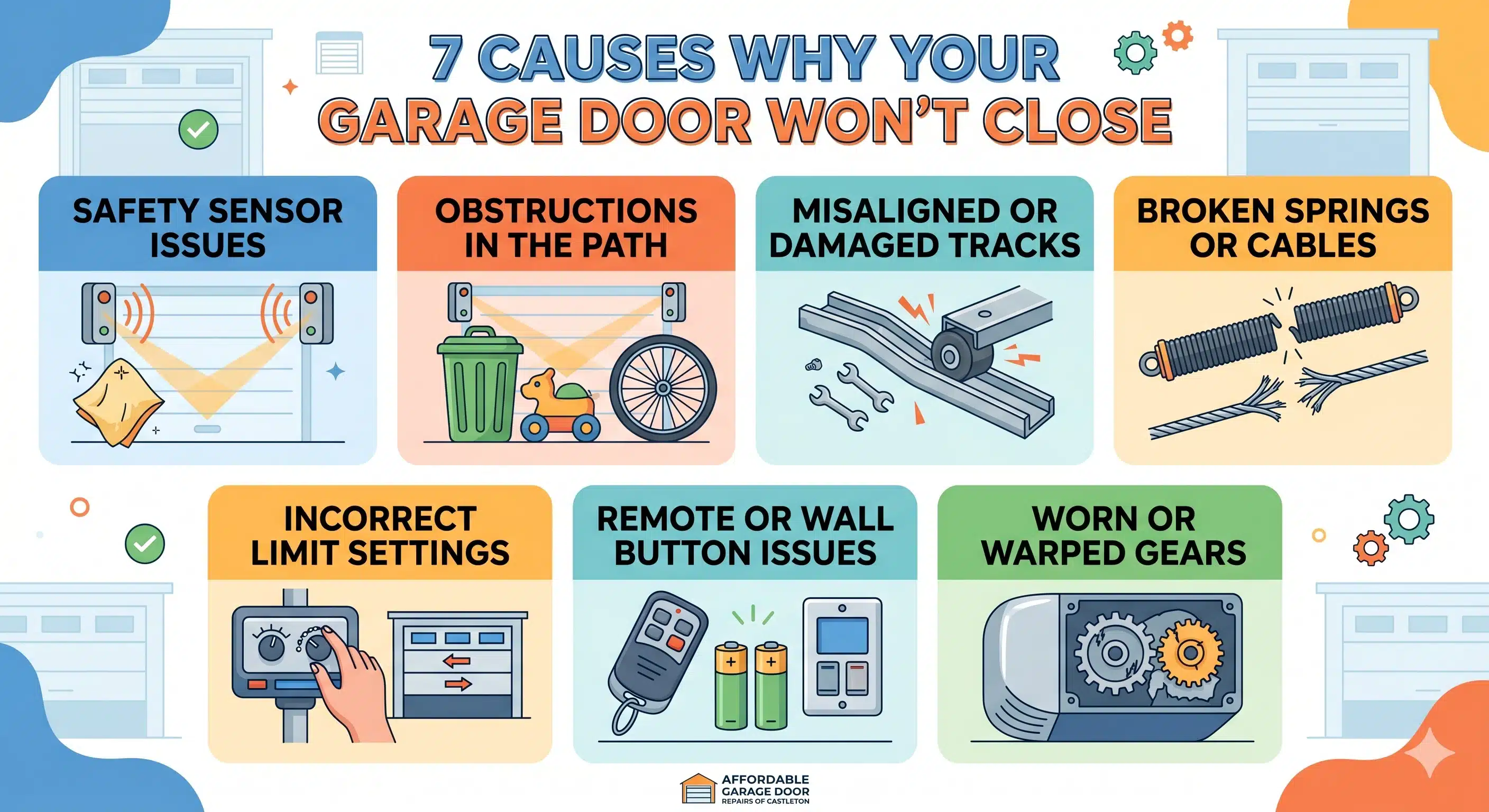
Common Reasons Your Garage Door Won’t Close
Safety Sensor Issues
Dirty or misaligned safety sensors are the most common reason a garage door won’t close, and many homeowners mistake the problem for a faulty opener.
Watch for these patterns:
- Indicator lights on one or both sensors blink instead of staying solid
- Closing attempts fail repeatedly, while the door opens without any issue
- Dust, cobwebs, or moisture have built up on the sensor lenses
- Garage door sensor alignment is visibly off, with one sensor pointing away from the other
- The opener light flashes a set number of times after every failed closing attempt
Wiping the sensor lenses with a dry cloth and adjusting the sensor brackets until both indicator lights stay solid is usually enough to restore normal closing functionality.
Obstructions in the Path
Even a small object near the sensor zone triggers the safety reverse system every single time until the obstruction is fully removed.
Look out for the following:
- A toy, trash can, or garden tool is sitting within the sensor’s line of sight
- Leaves, dirt, or debris have collected along the bottom of the door frame
- Ice or frost has built up along the floor threshold during colder months
- A vehicle bumper or a bike is parked too close to the door’s travel path
- The door reverses at the same spot every time, pointing to a consistent obstruction
Removing anything within two feet of the sensor path and testing the door immediately after is the fastest way to confirm whether an obstruction was the root cause.
Misaligned or Damaged Tracks
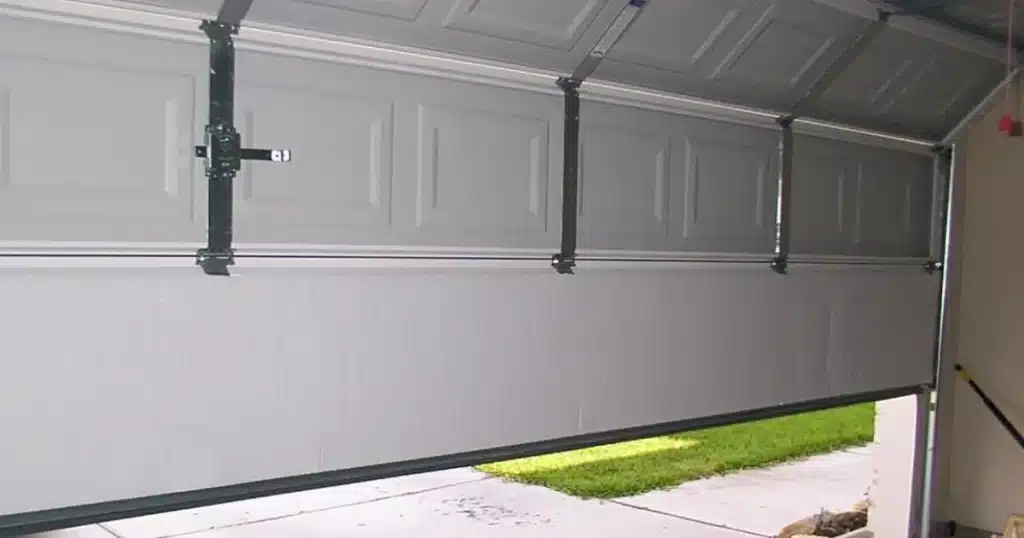
Bent or misaligned tracks push the rollers out of their intended path, creating friction that strains the door panels and the opener motor during closing.
Signs of a track problem include:
- Grinding or scraping sounds occur consistently during the closing cycle
- Visible gaps exist between the rollers and the track on one or both sides
- Dents or bends in the track are noticeable when inspecting the side of the door
- One side of the door moves more slowly than the other, causing an uneven appearance
- Loose brackets along the wall allow the track to shift during operation
Catching track damage early prevents the rollers from derailing completely, which is what turns a straightforward adjustment into a much larger repair.
Broken Springs or Cables
Garage door springs and cables carry the full weight of the door, and a failure in either one stops the opener from completing a closing cycle.
Key indicators of spring or cable failure include:
- A loud bang from the garage signals that a spring has snapped under tension
- Torsion springs above the door show visible gaps or separation in the coils
- Extension springs along the sides appear stretched, loose, or fully detached
- Cables on either side of the door look frayed, kinked, or have come off the drum
- Lifting the door manually feels extremely heavy or completely impossible
Broken garage door springs and snapped cables are not DIY repairs, and attempting to force the door closed with a failed spring puts the entire system at risk of further damage.
Incorrect Limit Settings
Incorrect travel limits cause the opener to reverse before the door reaches the floor because the system reads the ground as an obstruction.
Common signs of a limit-setting problem include:
- The door reverses just before the floor, even when nothing is blocking the path
- Power surges and accidental bumps shift the motor unit’s limit settings without warning
- Older openers with manual dials are more prone to limit drift than newer models
- The close limit dial determines how far down the door travels before stopping
- Running several test cycles after each adjustment confirms whether the correction held
Adjusting the close limit dial in small increments and testing after each turn is the standard approach to correcting a door that reverses before fully closing.
Remote or Wall Button Issues
Signal and power problems with the remote transmitter or wall control are among the most frequent reasons a garage door won’t close on command.
Watch for these signs:
- Remote produces no response from the opener, even at close range
- Dead batteries are the first thing to check before assuming a bigger problem
- The wall button works normally, while the remote does not, pointing to a signal issue
- Vacation mode on the wall control is blocking all remote commands
- Pressing the learn button on the motor unit and reprogramming the remote restores the connection
Replacing the batteries and reprogramming the remote resolves most signal-related closing failures without any additional tools or technical knowledge.
Worn or Warped Gears
Worn internal gears prevent the opener from transferring power to the trolley, leaving the motor running during closing with no door movement.
Signs of gear failure inside the opener include:
- Motor hums during a close attempt, but the door stays completely still
- Grinding or slipping occurs when the opener tries to engage the drive system
- Older openers with plastic gears strip faster, especially on heavier doors
- Power surges accelerate gear wear by overloading the assembly over time
- Replacing the gear set restores full function, though older units may need full replacement
Gear wear is a gradual process, and catching it early through regular inspection helps prevent a minor internal issue from becoming a full opener replacement.
How to Troubleshoot a Garage Door That Won’t Close
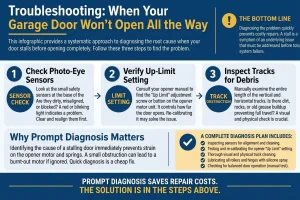
Narrowing down the problem before calling a technician saves time and helps you explain the issue accurately when professional garage door repair is needed.
Start with these basic checks:
- Walk the full perimeter and look for objects, debris, or ice near the sensor zone
- Check both sensor indicator lights and confirm they are solid, not blinking
- Test the wall button and remote separately to determine whether the issue is with the signal or the opener
- Listen for grinding, humming, or snapping sounds during closing to identify which component is struggling
- Pull the emergency release cord and attempt to close manually to rule out an opener failure
A few minutes of basic observation can reveal the root cause and determine whether the fix is a homeowner task or a job for a trained technician.
Fixes Homeowners Can Do Before Calling Anyone
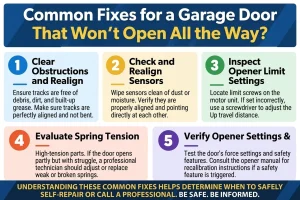
Not every garage door that won’t close requires a service call, and several common causes have straightforward fixes that homeowners can handle themselves.
Fixes worth trying before scheduling a repair:
- Wipe the sensor lenses with a dry cloth and adjust the brackets until both indicator lights stay solid
- Clear any objects, debris, or ice from within two feet of the sensor path on both sides
- Replace the remote batteries and reprogram it using the learn button on the motor unit
- Turn the close limit dial on the opener in small increments until the door reaches the floor without reversing
- Disconnect the opener using the emergency release cord and test whether the door moves smoothly by hand
Trying these fixes first helps determine whether the problem is a simple adjustment or a deeper issue that warrants a new garage door opener installation.
When to Call a Professional for a Garage Door That Won’t Close
Some garage door problems go beyond basic troubleshooting, and attempting to fix them without the right tools or training can worsen the damage.
Leave these repairs to a professional:
- Snapped torsion springs or cables make the door too heavy or impossible to move
- Severely bent or damaged tracks cause the door to bind, derail, or drop during closing
- Motor hums during a close attempt but produces zero door movement
- The door has come off its tracks completely and is visibly unstable or hanging
- Repeated adjustments to limit settings and force controls produce no improvement
To see what a professional inspection actually involves and how technicians diagnose a garage door that won’t close, read our guide on When to Call a Pro If Garage Door Won’t Close, which covers every scenario where expert hands make all the difference.
How Pros Handle a Garage Door That Won’t Close Completely
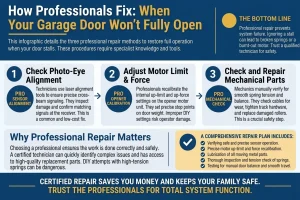
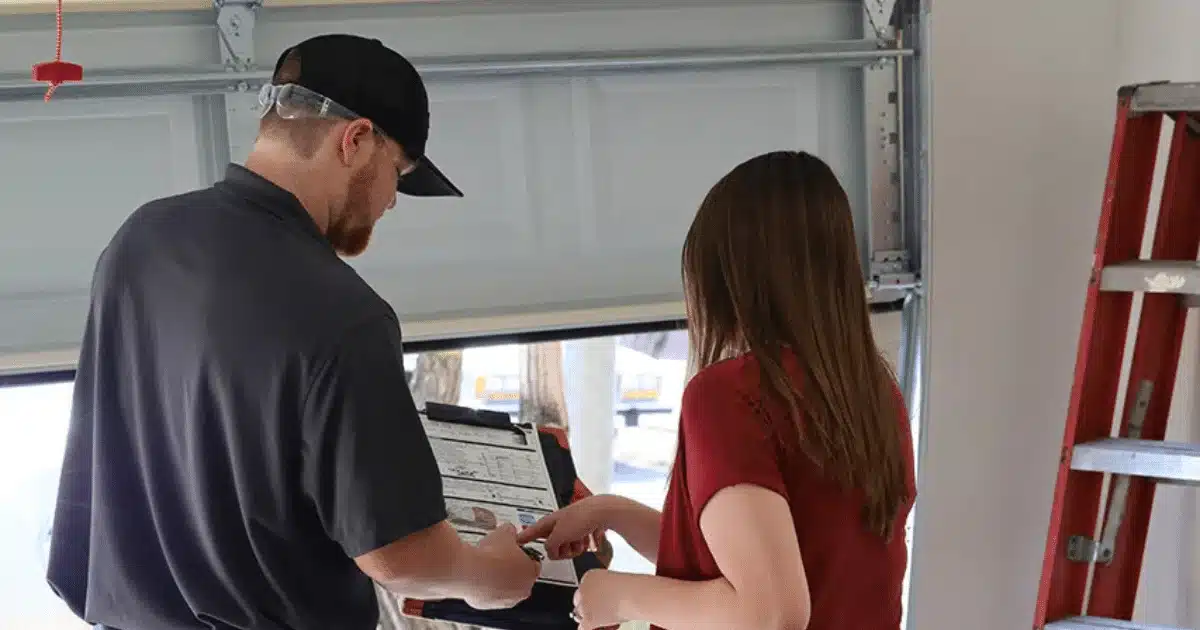
A professional garage door repair visit follows a structured process that goes beyond fixing what is visible and addresses the actual source of the problem.
Here is what a trained technician does during a service call:
- Runs a full open and close cycle to observe system behavior before touching anything
- Inspects springs, cables, tracks, rollers, sensors, and the opener for wear or damage
- Recalibrates force settings and travel limits against the door’s actual weight and travel distance
- Replaces failed components using parts matched to the door’s size and opener model
- Runs multiple test cycles to confirm the door closes fully and auto-reverse works correctly
Every step in the process is designed to identify the exact cause, and cases involving motor or gear failure typically require dedicated garage door opener repair to fully restore the system.
Maintenance Tips to Keep Your Garage Door Closing Properly
Regular maintenance is the most effective way to prevent a garage door from developing closing problems and avoid costly repairs down the line.
Simple habits that keep the system in good working order:
- Apply garage door-specific lubricant to hinges, rollers, and springs every six months
- Wipe both sensor lenses with a soft cloth monthly to remove dust and moisture
- Inspect torsion springs, cables, and tracks seasonally for rust, fraying, or wear
- Tighten loose bolts and brackets along the tracks during each seasonal inspection
- Schedule an annual professional tune-up to catch small issues before they escalate
To build a maintenance routine that keeps a garage door closing year-round properly, read our guide on How to Prevent a Garage Door From Not Closing, which covers every step homeowners can take to extend the life of their system.
Have Your Garage Door That Won’t Close Repaired by Local Experts in Castleton
A garage door that won’t close affects your home’s security, functionality, and peace of mind all at once, and every cycle you run on a struggling system puts more strain on the components holding it together. Identifying the root cause quickly is what prevents a minor issue from turning into a full system failure that costs significantly more to fix.
Affordable Garage Door Repairs of Castleton proudly serves homeowners throughout Castleton, IN, with professional garage door repair services built around precision and long-term performance. Contact us or give us a call, and let our trained technicians find exactly why your garage door won’t close and get it working properly again today.