

Your garage door may look like a simple panel that moves up and down, but it is actually part of a carefully coordinated system that works together every time you use it. The garage door spring carries most of the door’s weight during opening and closing, making smooth movement possible without excessive force. While the spring plays a central role, it does not work alone. It relies on cables, tracks, rollers, and the opener to guide the door and keep everything moving in sync.
Each component in this system has a specific purpose, and the interaction between them is what allows the door to operate smoothly and reliably. Understanding how the garage door spring works alongside these parts gives you a clearer picture of how the entire system functions, including what changes when a broken garage door spring disrupts that balance. This awareness can make it easier to recognize when something is not working as it should and when garage door repair may be needed to keep the door operating safely and consistently.
Understanding How a Garage Door Spring Works
A garage door spring operates by storing and releasing energy as the door moves. When the door closes, the spring tightens through stretching or twisting, building up tension that counteracts gravity. This stored energy is what makes a heavy garage door feel manageable when it opens, whether lifted by hand or powered by an automatic opener. The entire system is designed around balance, allowing the door to move smoothly instead of dropping or requiring excessive force.
Each full opening and closing of the door counts as one spring cycle. Springs are built to handle a limited number of these cycles, usually ranging between 10,000 and 20,000. Over time, repeated use places stress on the metal, gradually weakening it until the spring eventually fails. This natural wear explains why garage door springs do not last forever and must be replaced as part of normal system upkeep.
For a deeper look at how all the components work together behind the scenes, explore our blog titled “What Happens Inside a Garage Door Spring System?”
Main Components of a Garage Door Spring System
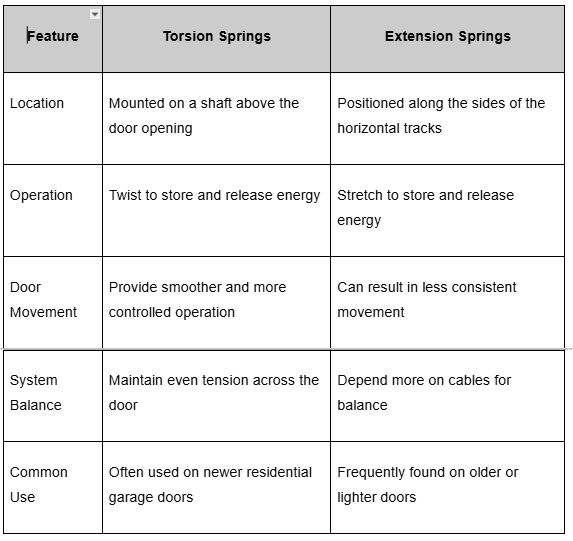
While the garage door spring provides the lifting force, it depends on several supporting components to move that force safely and evenly. Torsion springs are mounted above the door opening on a metal shaft and work by twisting as the door moves, while extension springs are positioned along the sides of the door near the tracks and function by stretching. In both setups, additional parts guide the door’s movement and help keep the entire system balanced.
These components work together to transfer the spring’s force to the garage door panel and maintain controlled movement. The main garage door components that interact with the spring include:
- Cables: Steel cables connect the spring system to the bottom of the garage door panel and carry the lifting force as the door moves.
- Drums or Pulleys: In torsion spring systems, drums allow the cables to wrap and unwind smoothly. In extension spring systems, pulleys guide cable movement during operation.
- Rollers and Tracks: Rollers travel inside the tracks on each side of the door, guiding the panel along a stable path as it opens and closes.
Because these parts differ depending on the spring system, understanding the type of spring your door uses helps explain how the entire garage door system functions together.
Common Garage Door Spring Types Used in Castleton, Indiana
Most residential garage doors in areas like Castleton, Indiana, rely on one of two spring systems: torsion springs or extension springs. Torsion springs are mounted on a metal shaft above the garage door opening and are widely used in modern door systems. As the door closes, the springs wind tightly and store torque, which is released when the door opens to lift the weight in a smooth and controlled way. This design helps keep the door balanced throughout its movement.
Extension springs are installed along the sides of the garage door, running parallel to the horizontal tracks, and are commonly found on lighter residential doors rather than heavy commercial garage doors. These springs store energy by stretching as the door lowers and then contract to assist with lifting when the door opens. While effective in the right setup, extension spring systems rely more heavily on cables to maintain balance and control. The choice between torsion and extension springs often depends on the door’s size, weight, and age, as well as how the system was originally designed.
How Garage Door Springs Work With Other Door Parts
The force created by a garage door spring only matters if it can be transferred to the door itself, which is why the spring must work in sync with several other components. The spring provides the counterbalance that offsets the door’s weight, while the cables, rollers, and tracks guide that force and control how the door moves. When these parts work together properly, the door opens and closes smoothly instead of feeling heavy or unstable.
The garage door opener plays a supporting role by initiating movement, but it is not designed to handle the door’s full weight. That responsibility belongs to the spring. When a spring weakens or fails, the opener is forced to compensate, placing strain on the system and disrupting normal operation. Proper coordination between all garage door components is what keeps the system functioning reliably, which is why understanding how each part interacts with the spring is so important.
To learn more about this constant force at work, read our blog “Why Is a Garage Door Spring Under Constant Tension?”
Interaction Between the Garage Door Spring, Tracks, and Rollers
Tracks and rollers guide the garage door along a controlled path as it opens and closes, and the garage door spring makes that movement manageable by reducing resistance. When the spring is working correctly, the rollers move smoothly within the tracks, allowing the door to operate quietly and evenly. This balance helps prevent excess friction and keeps stress off the surrounding hardware.
When a spring breaks, that balance is lost almost immediately. With extension spring systems in particular, a failure on one side causes uneven pressure along the tracks. Rollers on the supported side press harder into the track, while rollers on the opposite side may lose proper contact. This imbalance can cause grinding, binding, or sudden stops, and in severe cases, a roller may leave the track entirely, leaving the door jammed or misaligned.
Common effects of a broken spring on tracks and rollers include:
- Uneven Wear: Rollers on the side with remaining tension are subjected to excessive pressure.
- Track Damage: Uneven movement can bend or twist vertical and horizontal tracks.
- Roller Failure: Rollers or their internal bearings may crack or wear prematurely under added strain.
- Jammed Door: A roller leaving the track can prevent the door from moving at all.
How Cables, Drums, and Pulleys Support Garage Door Spring Movement
Cables serve as the connection between the spring’s stored energy and the weight of the garage door. In a torsion spring system, cables run from the bottom corners of the door to drums mounted on each end of the torsion shaft. As the springs unwind, the drums rotate and wind the cables evenly, lifting the door in a controlled manner. Extension spring systems use a similar concept, with cables running through pulleys before attaching to the springs on each side.
These components work together to keep the door balanced as it moves, which is especially important for residential garage doors that are used multiple times each day. When spring tension is even, both cables carry equal force, allowing the door to rise and lower in a straight, stable path. If a spring breaks, that balance disappears quickly, and the cable connected to the failed spring loses tension while the opposite cable remains tight, causing the door to tilt and strain the system.
When spring tension is lost, several issues can follow:
- Loss of Tension: The cable attached to the broken spring becomes slack immediately.
- Uneven Pull: The remaining spring continues to pull, causing the door to hang at an angle.
- Cable Unspooling: Loose cables can slip off drums or pulleys and become tangled.
- Operational Failure: Once cable tension is disrupted, the door may stop moving or become stuck.
What Happens When a Garage Door Spring Breaks
A broken garage door spring is one of the most common and disruptive issues a door system can face. When it fails, the sound can be sudden and startling, often compared to a firecracker going off as stored energy is released all at once. At that moment, the garage door effectively becomes dead weight. What once required minimal effort to lift can suddenly feel impossibly heavy, creating serious safety concerns. A door that drops or cannot be controlled properly can cause injury or damage to anything beneath it.
Once a spring breaks, the door is no longer supported as designed. Attempting to lift it by hand or relying on the automatic opener places strain on parts that were never meant to carry the full load. Even with a broken spring, the system can still hold dangerous levels of tension, which makes the situation unsafe to handle without proper equipment and experience. Addressing the issue promptly helps prevent further damage and reduces the risk of more extensive repairs.
For a closer look at why these issues develop, read our blog “What Causes Imbalance in a Garage Door Spring System?”
System Effects of a Broken Garage Door Spring
When a garage door spring fails, the impact is rarely limited to the spring alone. The opener is often affected first because it is designed to guide movement, not lift the entire weight of the door. Continued operation under these conditions can wear down internal components, damage the drive system, or cause the motor to fail. What begins as a spring issue can quickly escalate into a much larger problem for the entire garage door system.
A broken spring also disrupts the door’s balance, which can cause it to tilt or move unevenly and affect how the door functions after garage door installation. This uneven motion places added stress on panels, hinges, rollers, and tracks, increasing the risk of bending or misalignment. Over time, repeated strain can weaken the structure of the door itself and lead to damage that extends beyond the original failure.
Using a garage door with a broken spring can lead to the following system-wide issues:
- Opener Damage: The motor and drive components are forced to work beyond their intended capacity.
- Panel and Track Bending: Uneven weight distribution can warp door panels and push tracks out of alignment.
- Cable and Drum Problems: Cables may lose tension, slip off drums, or become tangled during operation.
- Roller Strain: Rollers experience added pressure that can cause premature wear or failure.
- Complete Door Failure: Continued use can result in the door becoming stuck or unable to move safely.
When Garage Door Spring Repair or Replacement Becomes Necessary
When a garage door spring breaks, it cannot be repaired and must be replaced, because once the metal weakens and fails, its strength cannot be restored. Visible gaps in the coils, heavy rust, poor door balance, a door that feels unusually heavy when lifted, or one that drops too quickly are all signs that the spring is no longer doing its job and needs replacement. In these situations, addressing the issue promptly helps prevent further strain on the door system. The cost of replacing a garage door spring varies depending on several factors, including the type of spring, the size and weight of the door, and local labor rates, with torsion springs typically costing more than extension springs. A qualified garage door technician can evaluate the system and provide a clear breakdown of material and labor costs. While prices often fall within a general range, replacing both springs at the same time is usually recommended, since they are installed together and experience the same amount of wear, making simultaneous replacement a more balanced and reliable solution.
Understanding how the parts of a garage door spring system work together makes it easier to see why each component matters. Springs, cables, and tracks must stay in balance so the door can move smoothly and safely every time it opens or closes. Paying attention to how these parts interact can help you recognize early signs of trouble and understand when repairs or part replacements may be necessary. By watching for wear, damage, or anything that seems off, you give your garage door system a better chance to last longer and perform reliably. If questions come up or you want a clearer picture of how your door or spring system is functioning, speaking with a knowledgeable professional can help ensure everything is operating as it should.
When questions turn into concerns or problems that need expert attention, Affordable Garage Door Repairs of Castleton is a trusted local option for reliable, professional service. Our team understands how every part of a garage door spring system works together and approaches each job with care, accuracy, and attention to long-term performance. Whether you are dealing with unusual door behavior or simply want clarity about your system’s condition, we offer straightforward guidance and dependable solutions. Contact us today or give us a call to schedule a service visit and keep your garage door operating smoothly and safely.
Frequently Asked Questions
Can garage door spring repair or replacement be completed without specialized equipment?
Garage door spring replacement requires specialized tools and experience due to the extreme tension stored in the springs. Torsion springs, in particular, can cause serious injury if handled incorrectly. Professionals use specific equipment to safely control and release tension, which reduces the risk of sudden spring movement or door collapse. Without the proper tools and training, attempting this work greatly increases the chance of injury or further damage to the door system.
Is garage door spring replacement necessary for both springs when only one has failed?
Replacing both garage door springs at the same time is generally recommended because they wear out at a similar rate. Installing only one new spring can leave the system unbalanced, which places added strain on the opener and the remaining older spring. Replacing the full set helps maintain proper door balance and supports consistent operation across the entire system.
How does a garage door spring failure affect other door components?
A broken garage door spring places immediate stress on the rest of the system because the door loses its balance and no longer moves as designed. The opener may be forced to lift more weight than it was built to handle, which can damage the motor or strain the drive components over time. An unbalanced door also puts added pressure on tracks, rollers, and cables, increasing the risk of misalignment, binding, or tangling that can turn a single spring failure into a wider system issue. For a helpful explanation of how garage door springs function within the system, you can refer to Liberty Home Guard.
How does a garage door spring support proper door balance during operation?
The garage door spring is designed to counteract the weight of the door by storing and releasing energy as it moves. This balance allows the door to lift smoothly, remain in place when stopped, and close without slamming. Proper spring tension ensures the door feels light and controlled, which protects both the door structure and the opener during everyday use.
Why does a door become harder to lift when there is a broken garage door spring?
When a garage door spring breaks, the door loses the counterbalance that supports its weight. This means the full weight of the door must be lifted manually or by the opener, which is not designed for that load. As a result, the door feels extremely heavy, becomes difficult to move, and may stop functioning altogether until the spring is replaced.
How do cables respond when the garage door spring tension changes?
Garage door cables rely on consistent spring tension to lift the door evenly. When a spring breaks, the cable on that side immediately loses tension and may loosen, slip, or come off its drum or pulley. Meanwhile, the opposite cable remains tight, which causes the door to tilt and increases the risk of jamming or misalignment.
Can problems with a garage door spring influence track or roller movement?
Issues with a garage door spring can directly affect track alignment and roller movement. An unbalanced door may lean to one side, forcing rollers to press unevenly against the tracks. This added pressure can bend tracks, damage rollers, or cause the door to bind or derail during operation.
What role does the garage door spring play in smooth door movement?
The garage door spring controls how smoothly the door opens and closes by balancing the door’s weight throughout its movement, which helps prevent sudden drops, rapid motion, or uneven travel along the tracks. When the spring is properly tensioned, the door moves in a steady and controlled way without placing unnecessary strain on the opener or other components. For additional insight into how garage door springs work and when they need attention, you can read more at Keneng Hardware.
How does long-term wear on a garage door spring relate to garage door spring repair cost factors?
Garage door springs naturally wear out as they cycle through thousands of openings and closings over time. This repeated stress gradually weakens the metal until replacement becomes necessary. Repair costs are influenced by factors such as spring type and local labor rates, since different systems require different materials and handling. While wear cannot be avoided, spring quality and usage patterns play a role in how long a replacement lasts.
Can garage door spring repair or replacement be completed without specialized equipment?
Garage door spring replacement requires specialized tools and experience due to the extreme tension stored in the springs. Torsion springs, in particular, can cause serious injury if handled incorrectly. Professionals use specific equipment to safely control and release tension, which reduces the risk of sudden spring movement or door collapse. Without the proper tools and training, attempting this work greatly increases the chance of injury or further damage to the door system.
Is garage door spring replacement necessary for both springs when only one has failed?
Replacing both garage door springs at the same time is generally recommended because they wear out at a similar rate. Installing only one new spring can leave the system unbalanced, which places added strain on the opener and the remaining older spring. Replacing the full set helps maintain proper door balance and supports consistent operation across the entire system.
How does a garage door spring failure affect other door components?
A broken garage door spring places immediate stress on the rest of the system because the door loses its balance and no longer moves as designed. The opener may be forced to lift more weight than it was built to handle, which can damage the motor or strain the drive components over time. An unbalanced door also puts added pressure on tracks, rollers, and cables, increasing the risk of misalignment, binding, or tangling that can turn a single spring failure into a wider system issue. For a helpful explanation of how garage door springs function within the system, you can refer to Liberty Home Guard.
How does a garage door spring support proper door balance during operation?
The garage door spring is designed to counteract the weight of the door by storing and releasing energy as it moves. This balance allows the door to lift smoothly, remain in place when stopped, and close without slamming. Proper spring tension ensures the door feels light and controlled, which protects both the door structure and the opener during everyday use.
Why does a door become harder to lift when there is a broken garage door spring?
When a garage door spring breaks, the door loses the counterbalance that supports its weight. This means the full weight of the door must be lifted manually or by the opener, which is not designed for that load. As a result, the door feels extremely heavy, becomes difficult to move, and may stop functioning altogether until the spring is replaced.
How do cables respond when the garage door spring tension changes?
Garage door cables rely on consistent spring tension to lift the door evenly. When a spring breaks, the cable on that side immediately loses tension and may loosen, slip, or come off its drum or pulley. Meanwhile, the opposite cable remains tight, which causes the door to tilt and increases the risk of jamming or misalignment.
Can problems with a garage door spring influence track or roller movement?
Issues with a garage door spring can directly affect track alignment and roller movement. An unbalanced door may lean to one side, forcing rollers to press unevenly against the tracks. This added pressure can bend tracks, damage rollers, or cause the door to bind or derail during operation.
What role does the garage door spring play in smooth door movement?
The garage door spring controls how smoothly the door opens and closes by balancing the door’s weight throughout its movement, which helps prevent sudden drops, rapid motion, or uneven travel along the tracks. When the spring is properly tensioned, the door moves in a steady and controlled way without placing unnecessary strain on the opener or other components. For additional insight into how garage door springs work and when they need attention, you can read more at Keneng Hardware.
How does long-term wear on a garage door spring relate to garage door spring repair cost factors?
Garage door springs naturally wear out as they cycle through thousands of openings and closings over time. This repeated stress gradually weakens the metal until replacement becomes necessary. Repair costs are influenced by factors such as spring type and local labor rates, since different systems require different materials and handling. While wear cannot be avoided, spring quality and usage patterns play a role in how long a replacement lasts.